

Site News
Intern Spotlight | John Oluwabori Ayanwale : Shaping the Future of Research
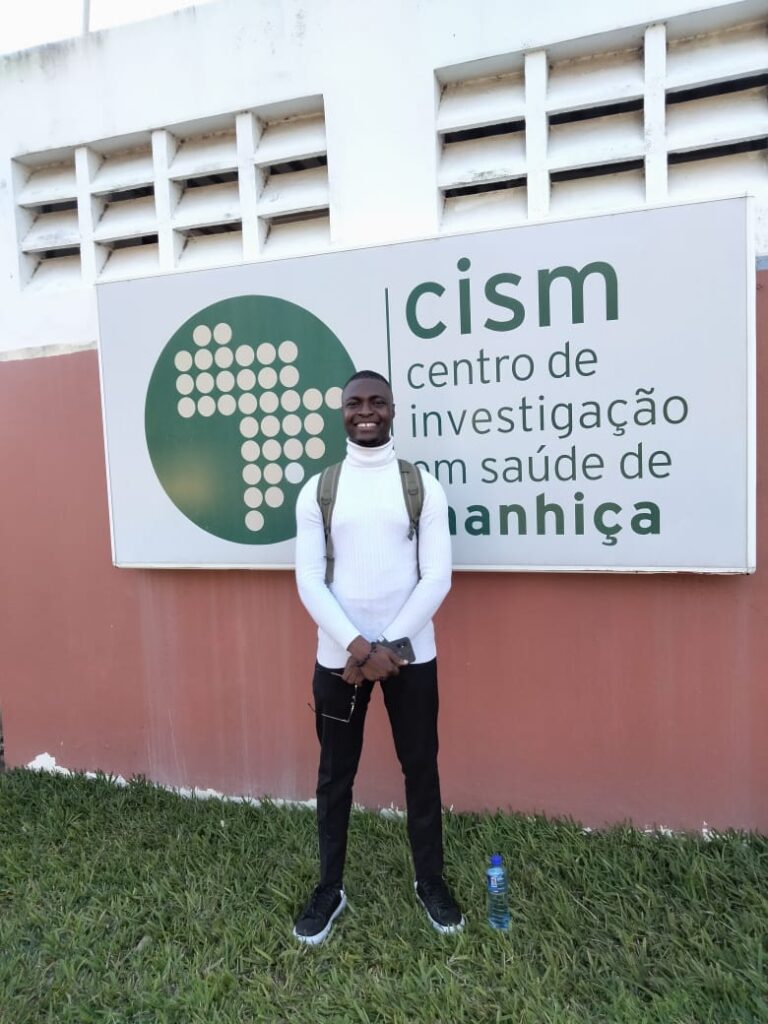
From May 1 to August 31, 2025, the CHAMPS Mozambique site – Manhiça Health Research Centre (CISM) hosted John Oluwabori Ayanwale as part of the CHAMPS internship program. John joined the team from the African Institute for Mathematical Sciences (AIMS) in Rwanda. With an MSc in Mathematical Sciences and a specialized focus on Malaria Modelling, his time at the Manhiça site was spent applying quantitative analysis to infectious disease trends. His internship provided an opportunity to bridge the gap between theoretical modeling and the practical realities of health research in a field setting.
In this spotlight, John reflects on his four months in Mozambique and the role of mathematical modeling in strengthening regional health outcomes.
Part 1: The Data & The Project
1. What was the primary focus of your project?
The primary focus of my project was to develop and evaluate a machine-learning–based approach to predict malaria as a cause of death among children, using CHAMPS verbal autopsy data from Mozambique. Specifically, my research sought to determine whether supervised learning models, particularly Random Forest classifiers, could accurately identify malaria-related deaths and complement existing CHAMPS cause-of-death assignment processes. The broader goal was to explore how data-driven methods could enhance mortality surveillance and support evidence-based public health decision-making in malaria-endemic settings.
2. How did you interact with CHAMPS Data specifically?
I worked extensively with CHAMPS verbal autopsy (VA) data, supplemented by TAC (TaqMan Array Card) laboratory results and clinician-reviewed cause-of-death classifications. My interaction with the data involved:
- Cleaning and preprocessing high-dimensional VA datasets
- Feature engineering and selection from symptom, demographic, and clinical variables
- Linking VA records with laboratory-confirmed malaria results for validation.
All analyses were conducted primarily in R, using packages for data wrangling, machine learning, and model evaluation. I implemented Random Forest models, performed internal validation, and assessed model generalisability across subsets of the data.
3. What was the most surprising or interesting trend you found in the data?
One of the most striking findings was the discordance between symptom-based verbal autopsy indicators and laboratory-confirmed malaria results in some cases.
Certain symptoms traditionally associated with malaria did not always align with TAC-confirmed malaria deaths, while some laboratory-positive cases presented with atypical symptom profiles. This highlighted the complexity of cause-of-death attribution in high-burden settings and reinforced the value of combining clinical, laboratory, and statistical approaches.
4. What were the biggest challenges you faced when cleaning or analyzing this specific dataset?
The main challenges included:
- Missing and incomplete data, which required careful handling to avoid bias
- High dimensionality and collinearity among verbal autopsy variables
- Harmonising data from multiple sources (VA, TAC, and cause-of-death labels)
I addressed these challenges through systematic data cleaning, appropriate imputation, feature selection, and sensitivity analyses to ensure the robustness of my findings.
Part 2: The Site Experience
5. What was it like working on-site in Mozambique?
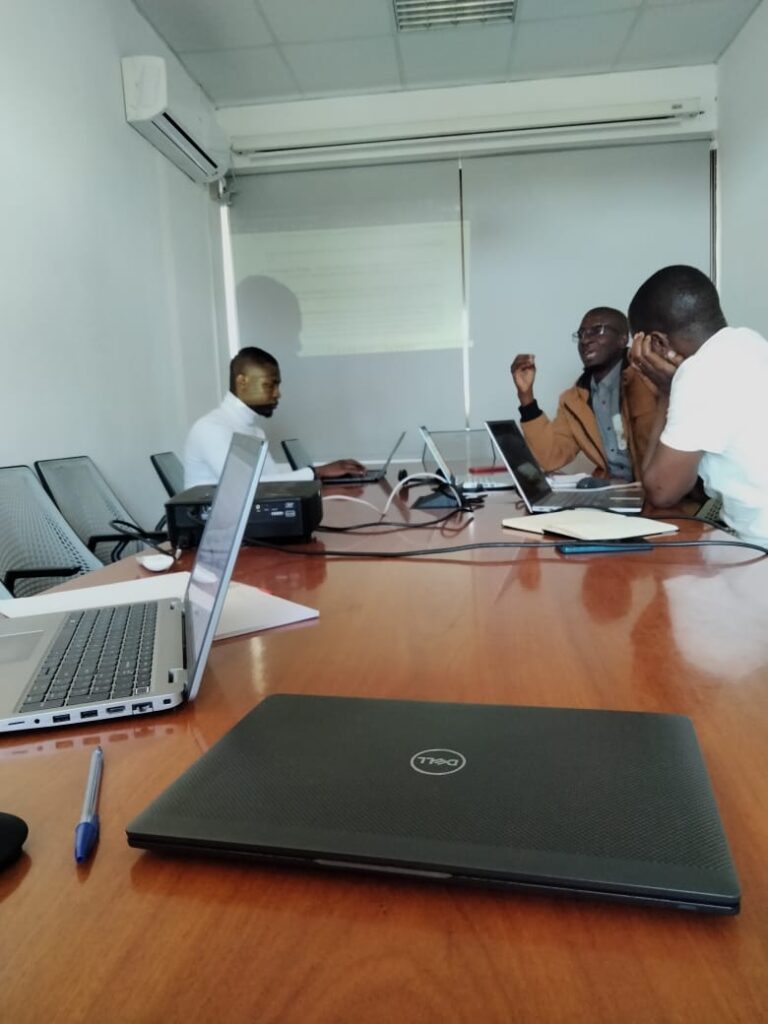
Working on-site at CISM in Manhiça was an enriching experience. The environment was highly collaborative, with close interaction between epidemiologists, clinicians, laboratory scientists, and data analysts. I had opportunities to engage with the local research teams, gain exposure to the operational aspects of CHAMPS, and better understand how data is generated from community surveillance to laboratory diagnostics.
6. How did being at the site change your understanding of the data you were analyzing?
Being physically present at the site gave the data critical context and human meaning. Seeing how verbal autopsy interviews are conducted and how laboratory samples are processed helped me appreciate the uncertainties, constraints, and real-world complexities behind the datasets. This experience fundamentally changed how I interpreted patterns in the data, moving beyond abstract numbers to a deeper understanding of the lived realities behind child mortality statistics.
7. Who was a mentor who made a difference during your time there?
I was fortunate to receive guidance from researchers such as Dr. Arsénio Nhacolo at CISM and Dr. Inácio Mandomando (CHAMPS), who provided valuable feedback on both the scientific and practical aspects of my work. Their mentorship strengthened my analytical approach and deepened my understanding of applied global health research.
Part 3: The Impact & Future
8. How has this internship influenced your career goals in Global Health or Data Science?
This internship strongly reinforced my commitment to a career in infectious disease modeling, epidemiology, and data-driven public health research. Working with CHAMPS data demonstrated how advanced statistical and machine learning methods can directly inform disease surveillance and policy. It motivated me to pursue doctoral training focused on mathematical and statistical modeling of infectious diseases, particularly in low- and middle-income countries.
9. What advice would you give to a future intern about to start working with CHAMPS data?
I would advise future interns to:
- Take time to understand the structure and context of the data before modeling
- Engage actively with site researchers to learn how the data is collected
- Be patient and methodical when working with complex, real-world datasets
- Always connect analytical results back to their public health implications.
Part 5: Just for Fun (Rapid Fire)
- One word to describe the CHAMPS team at your site: Collaborative
- Favorite local meal you ate during your internship: White Rice and avocado leaves
- Favorite tool/software shortcut you used daily: RStudio data wrangling shortcuts (e.g., dplyr pipelines)
- Soundtrack of your internship (one song or artist): Portuguese songs which I don’t understand but love the beats
Related News
February 16, 2026
Intern Spotlight | Aliani Ahamada Saif-Dinne : Shaping the Future of Research
From May 2 to September 30, 2025, Aliani Ahamada Saif-Dinne joined the CHAMPS team in Manhiça, Mozambique, contributing to the ongoing research efforts at the Manhiça Health Research Centre (CISM). Aliani is an MSc in Mathematical Sciences graduate from the African Institute for Mathematical Sciences (AIMS) in Rwanda, specializing in Malaria Modeling. During his five-month […]
Read More… from Intern Spotlight | Aliani Ahamada Saif-Dinne : Shaping the Future of Research
